


How are Unmanned Vehicle Propulsion Motors Tested ?
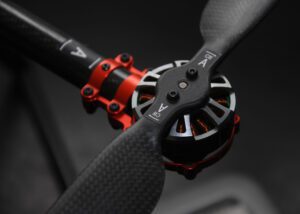 For UAVs, UGVs and USVs, propulsion system performance directly determines mission reliability, endurance and range. While datasheet specifications provide a useful starting point, only testing under realistic operating conditions reveals the true behavior of the complete drive system.
Magtrol’s motor test solutions accurately simulate real operating conditions by applying a precisely controlled mechanical load to the propulsion system. Advanced dynamometer control enables application-specific operating points and load profiles to be reproduced using torque, speed, power or other control modes. At the same time, key mechanical parameters – including torque (N·m), speed (rpm), mechanical output power (W), temperature and additional performance data – are acquired with high accuracy.
Synchronous measurement of the electrical input power [W] and the mechanical output power (W) enables the overall efficiency of the propulsion system to be determined across the entire operating range. Detailed performance and efficiency maps provide engineers with the information needed to compare motors, ESCs, propellers and complete propulsion concepts, identify energy-efficient operating points and validate system integration.
The result is optimized propulsion system performance, reduced power consumption, extended operating time and increased mission range – critical advantages for today’s unmanned vehicles.
You can now get a clear picture of your engine’s performance and behavior based on your platform’s specifications !
Testing applications for UAV, UGV, USV & UUV propulsion systems.
- UAV propulsion system testing: Simulate propeller load characteristics, aerodynamic drag, acceleration and transient responses during take-off, landing and flight control maneuvers.
- UGV propulsion system testing: Reproduce rolling resistance, gradient loads, vehicle inertia, start/stop cycles and dynamic driving conditions encountered in real-world operation.
- USV & UUV propulsion system testing: Replicate propeller and thruster load characteristics, hydrodynamic drag, continuous low-speed/high-torque operation and varying mission profiles.
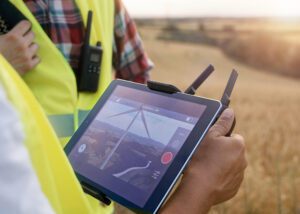
Tablet screen remote controller drone flying app operated by engineers surveying wind turbines. Aerial Technology for maintenance work
Advanced dynamometer control accurately reproduces application-specific operating points and load profiles using torque, speed, power or other control modes. Automated test sequences – including acceleration, endurance, efficiency, overload and locked-rotor testing – can be executed repeatably with high precision.
From R&D and design verification to end-of-line production testing, Magtrol systems provide repeatable, automated and fully traceable test procedures for propulsion system characterization, quality assurance and certification.
What Unmanned Vehicle applications can be tested ?
Magtrol’s motor and propulsion system test solutions support the development, validation and production testing of electric drive systems for unmanned aerial, ground and marine vehicles. Our solutions help manufacturers evaluate motors under real-world load conditions. Typical applications include:
Unmanned Aerial Vehicles (UAVs / Drones)
- Commercial & Recreational: Photography, videography, inspection and consumer drones,
- Industrial & Scientific: Surveying, mapping, agriculture, environmental monitoring and infrastructure inspection,
- Emergency Services: Search and rescue, firefighting, disaster response and hazardous environment operations,
- Logistics & Transportation: Parcel delivery, construction and autonomous transport systems,
- Defense: Reconnaissance, surveillance and tactical UAV platforms,
- Special Applications: Drone racing, entertainment and advertising.
Unmanned Ground Vehicles (UGVs)
- Industrial Automation: Warehouse logistics, autonomous mobile robots (AMRs), mining and construction,
- Agriculture: Precision farming, weed control, spraying and autonomous field robots,
- Public Safety: Firefighting, hazardous material handling and disaster response,
- Defense: Reconnaissance, explosive ordnance disposal (EOD), mine clearance and unmanned combat vehicles.
Unmanned Surface Vehicles (USVs) & Unmanned Underwater Vehicles (UUVs)
- Scientific Research: Oceanography, hydrography, mapping and environmental monitoring,
- Commercial & Industrial: Offshore inspection, pipeline and cable inspection, hull inspection and oil & gas operations,
- Maritime Security: Port security, coastal surveillance and search & rescue,
- Defense: Naval reconnaissance, mine countermeasures, training systems and autonomous maritime defense platforms.
What types of drone motor can be tested ?
Our Magtrol’s motor test systems are fully configurable and can be adapted to a wide range of electric propulsion systems used in unmanned aerial, ground and marine vehicles.
Typical applications include:
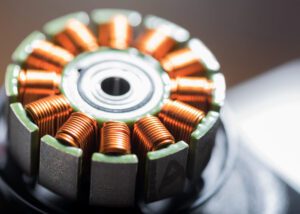
Close up of motor armature
- High-speed electric motors up to 100000 rpm
- Miniature and micro motors from less than 5 W
- High-torque and high-power motors up to 1200 N·m and 140 kW
- BLDC, PMSM and Brushed DC Motors
- Inrunner or Outrunner motors
- Frameless and integrated motors
- Complete propulsion systems, including motor, ESC/inverter and associated power electronics
Each test bench can be configured to meet specific testing requirements and supplied as a complete solution, including dynamometers, torque and speed transducers, signal conditioning, power analyzers, mechanical fixtures, safety enclosures and Magtrol’s test and automation software.
Magtrol specializes in testing and measurement technology—not motor design or manufacturing. Our solutions enable accurate characterization, validation and production testing of electric propulsion systems throughout the entire product development lifecycle.
Drone Motor Testing Parameters
Magtrol motor test systems enable precise characterization of UAV propulsion systems (and other drone types) under real operating conditions. Key parameters include:
- Torque vs. speed curves – Evaluate motor behavior across the full operating range (view graph*)
- Electrical power consumption – Measure energy usage for flight time and endurance optimization (view graph*)
- Dynamic load simulation – Reproduce thrust profiles and maneuver-dependent resistance (view graph*)
- No-load vs. load operation – Identify control instabilities, ESC behavior and potential degradation effects (view graph*)
- Thermal performance – Monitor temperature rise under sustained hover and mission duty cycles.
- Start-up and stall behavior – Validate torque peaks, safety limits and system protection strategies (view graph*)
- Efficiency maps – Characterize system efficiency across the full operating envelope (view graph*).
* These visuals are typical examples of graphs generated by our softwares. They do not necessarily correspond to drone motor tests.
What are objectives of Drone Motor Testing ?
The main objectives of propulsion system testing – which primarily concerns Unmanned Aerial Vehicles (UAVs), but also applies to all types of drones – are as follows:
- Validate KV rating and efficiency against manufacturer specifications
- Map torque, speed and power characteristics across the entire operating range
- Assess thermal stability under continuous and transient loads (hover, cruise, mission profiles)
- Validate ESC–motor interaction and control loop stability
- Reproduce real-world mission profiles including take-off, cruise and emergency shutdown scenarios
- Generate engineering data for design validation and certification documentation
- Estimate battery consumption and mission endurance based on realistic load profiles
Compliance and Certification support for Drone Motor Testing ?
Magtrol test systems do not issue certifications directly, but provide high-accuracy measurement data required to support qualification and certification processes for UAV propulsion systems, including:
- EASA SC-VTOL (Europe)
- UK CAA SC-VTOL (UK)
- FAA 14 CFR Part 21.17(b) (USA)
- CAAC (China Civil Aviation Authority)
- JCAB airworthiness guidelines (Japan)
- DGCA regulations (India)
- IEC 60034 – Rotating Electrical Machines
- DO-160 – Environmental Conditions and Test Procedures for Airborne Equipment
- CE, FCC and ISO-based quality frameworks
What are the benefits of using magtrol systems ?
- High-precision measurement of critical propulsion parameters (torque, speed, electrical power, efficiency)
- Fully automated and repeatable test sequences for R&D and production environments
- Comprehensive performance maps for motor selection, validation and documentation
- Scalable configurations covering micro UAVs to heavy-lift propulsion systems
- Reliable test data supporting certification, qualification and regulatory compliance
What is the best equipment for testing drones motors?
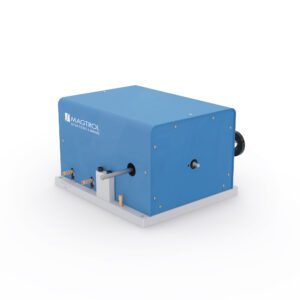 Magtrol offers industry-leading motor testing equipment for home appliances, including eddy current dynamometers, torque sensors, and automated test systems—ideal for verifying performance, efficiency, and safety.
WB 32 Series – High-Speed Eddy-Current Dynamometers
WB23/27 – High-Speed Eddy-Current Dynamometers
WB Series – Eddy-Current Dynamometers
TM 300 Series – Torque Sensors
RT Series – Reaction Torque Sensors
TS 100 Series – Torque Sensors
DSP 7010 Series – Dynamometer Controller
Need help choosing the right Unmanned vehicle Motor Testing Equipment?
Whether you’re designing an underwater drone for defense, evaluating a motor, or performing end-of-line inspection, Magtrol’s experts are here to help you build the custom system you need.
Ready for your solution? Contact us today.
You can also check out our other help and information pages: Motor Testing for Unmanned Vehicles (UAV, UUV, UGV, USV) and Motor testing for drones and Unmanned Vehicles FAQ


